Research September 3, 2026 at 9:40 PM
Trust Your Gut or Understand Your Gut?
A personal physical experience prompted a careful look at interoception and the microbiota–gut–brain axis—without assuming that one caused the other.
Today, something unexpected happened while I was taking my class.
I was in the middle of teaching when I suddenly felt a jerk or spasm around my back, possibly in the thoracic region. It happened so suddenly that, for a moment, I did not understand what was happening. Almost immediately afterward, I started feeling dizzy, uneasy, and strangely uncomfortable. I had this sudden feeling of, “What just happened to me?”
For a few moments, I felt as if I could not move normally.
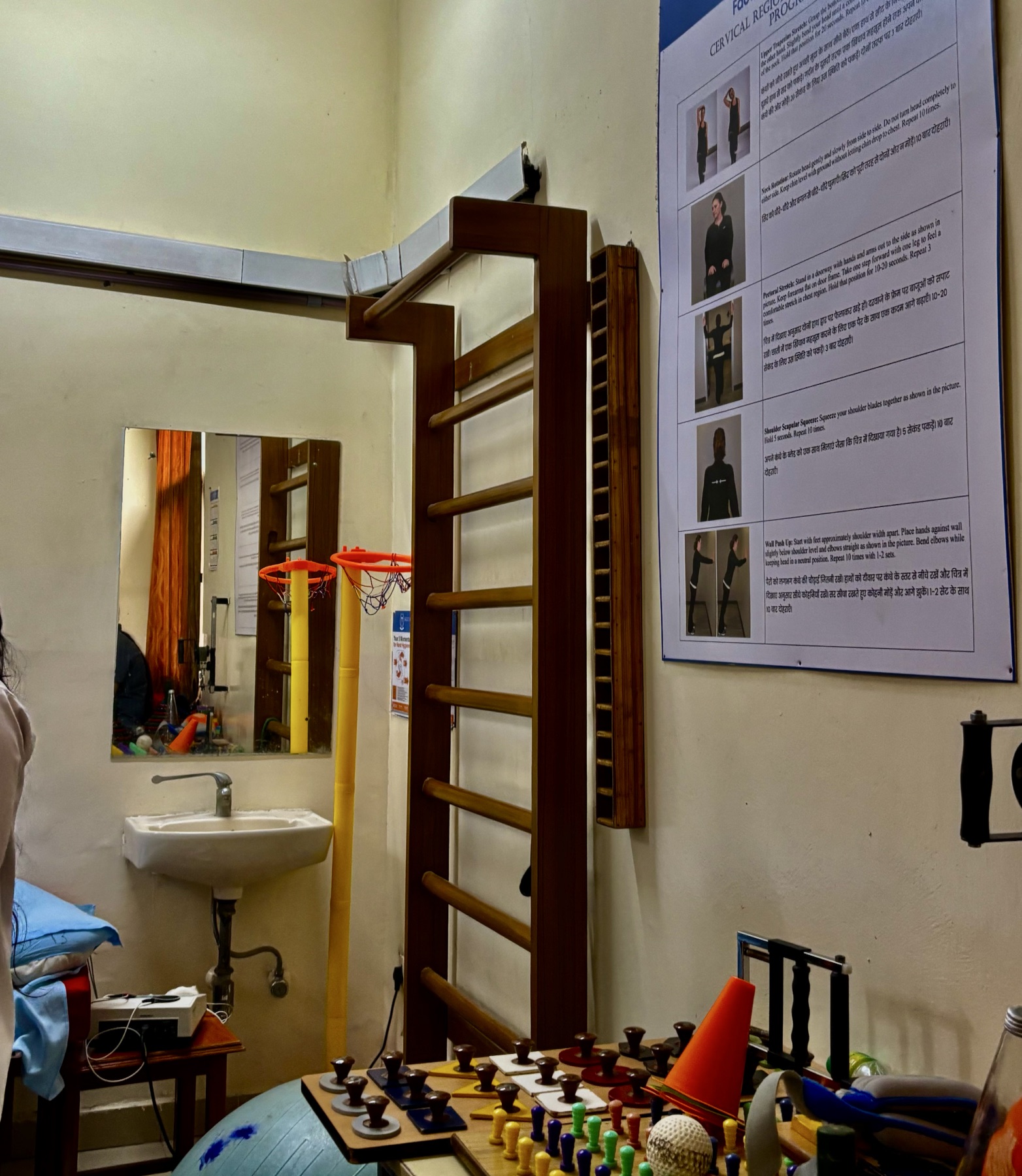
Being in a medical research environment, my first instinct was not to panic but to look for help. I went to the physiotherapy department. While they were assessing me, something interesting happened.
I asked a question:
“Can something like this have a connection with the gut? Or can our gut somehow tell us that something is not right with the body?”
It was not a completely random question.
For the past three days, I had already felt that my gut was not quite normal. Nothing dramatic—just a sense that something was different. After experiencing the sudden muscle spasm and dizziness, I started wondering whether these things could somehow be connected.
That question stayed in my mind. Later, when I went home, I started reading about the gut–brain axis.
And this is where the scientist in me became curious.
What the research says
The gut and brain are not two completely independent systems. They communicate in both directions through neural, immune, endocrine, and metabolic pathways. The vagus nerve is one important communication route, while hormones, immune mediators, and metabolites produced or influenced by the gut microbiota can also participate in this communication (Annual Review of Medicine).
So, in a very real biological sense, the gut can communicate with the brain, and the brain can communicate back with the gut.
This also made me think about the phrase we casually use:
“Trust your gut.”
We usually mean intuition.
But biologically, there is something fascinating underneath that expression. Our brain constantly receives information from inside the body—a process called interoception. Signals arising from organs, including the gastrointestinal system, can influence how we perceive our internal state, emotions, and overall well-being (gut–brain axis review).
However, there is an important distinction.
My experience today does not prove that my gut caused my back spasm or dizziness.
A muscle spasm can have many possible explanations, and dizziness can have many causes. The fact that I had noticed changes in my gut for several days and then experienced a physical episode today does not establish a causal connection.
But it did remind me of something I often forget:
The body is a system, not a collection of isolated organs.
The nervous system, gastrointestinal system, immune system, endocrine system, and brain are continuously communicating.
Research on the microbiota–gut–brain axis is still developing, but scientists increasingly recognise that gut microbes and their metabolites can participate in signalling pathways that influence brain and nervous-system function (Cellular and Molecular Life Sciences).
And perhaps that is why today’s experience stayed with me.
I went into class as a teacher.
Then, for a few minutes, I became the person being assessed.
Somewhere between the physiotherapy room, my question about the gut, and reading scientific literature at home, I found myself looking at my own body differently.
Not through fear.
But through curiosity.
Sometimes our bodies give us a reason to stop.
Sometimes science gives us a way to understand what we experience.
And sometimes, one unexpected moment can remind us that we are not just a brain thinking inside a body—we are an interconnected biological system constantly communicating with itself.
Today, my body interrupted my class.
But it also gave me a question worth exploring.
Trust your gut or understand your gut?